Understanding Focused Shockwave Therapy
A Powerful, Non-Invasive Solution for Chronic Pain and Injury,
Shockwave Therapy (ESWT – Extracorporeal Shockwave Therapy) is a cutting-edge, non-invasive treatment used to accelerate healing in damaged tissues, relieve pain, and stimulate recovery from a range of musculoskeletal conditions. It has also been proven to work well for Men’s Health / erectile dysfunction, read more.
Originally developed over 40 years ago in Germany to treat kidney stones, shockwave therapy is now widely used by physiotherapists and endorsed by NICE (UK National Institute for Health and Care Excellence) for its clinical effectiveness.
What is Focused Shockwave Therapy?
Shockwave Therapy uses acoustic energy waves to trigger the body’s natural healing response. These sound waves interact with tissues to:
- Stimulate cell regeneration and growth
- Increase blood flow
- Break down scar tissue and calcifications
- Relieve pain
- Accelerate tissue repair
It’s important to note: this is not an electric shock – the treatment is completely non-invasive and drug-free.
Types of Shockwave Therapy We Use
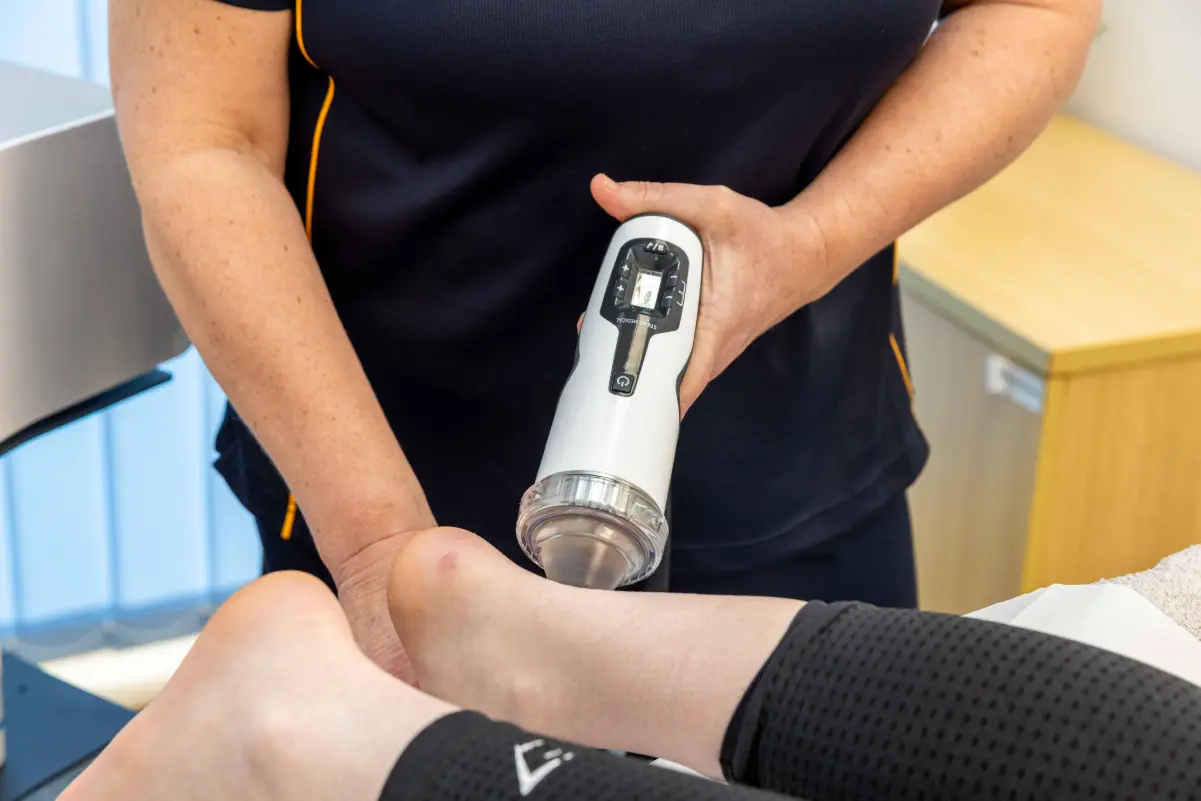
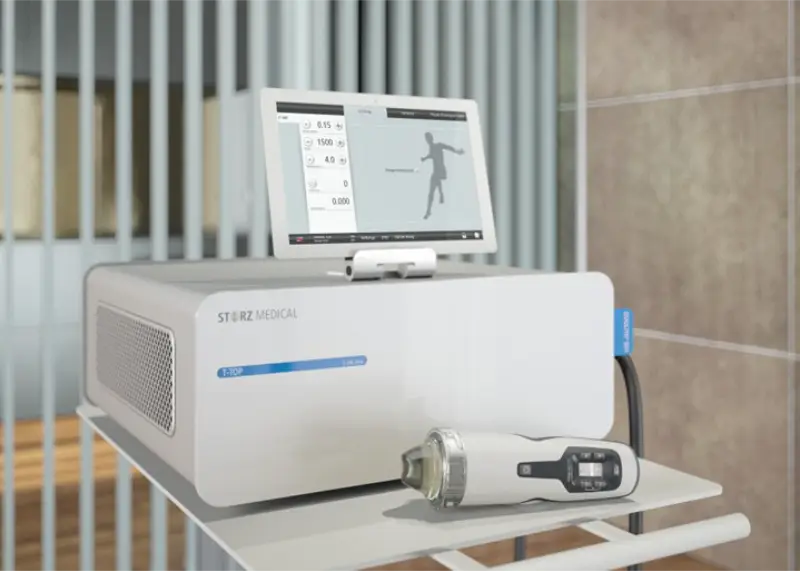
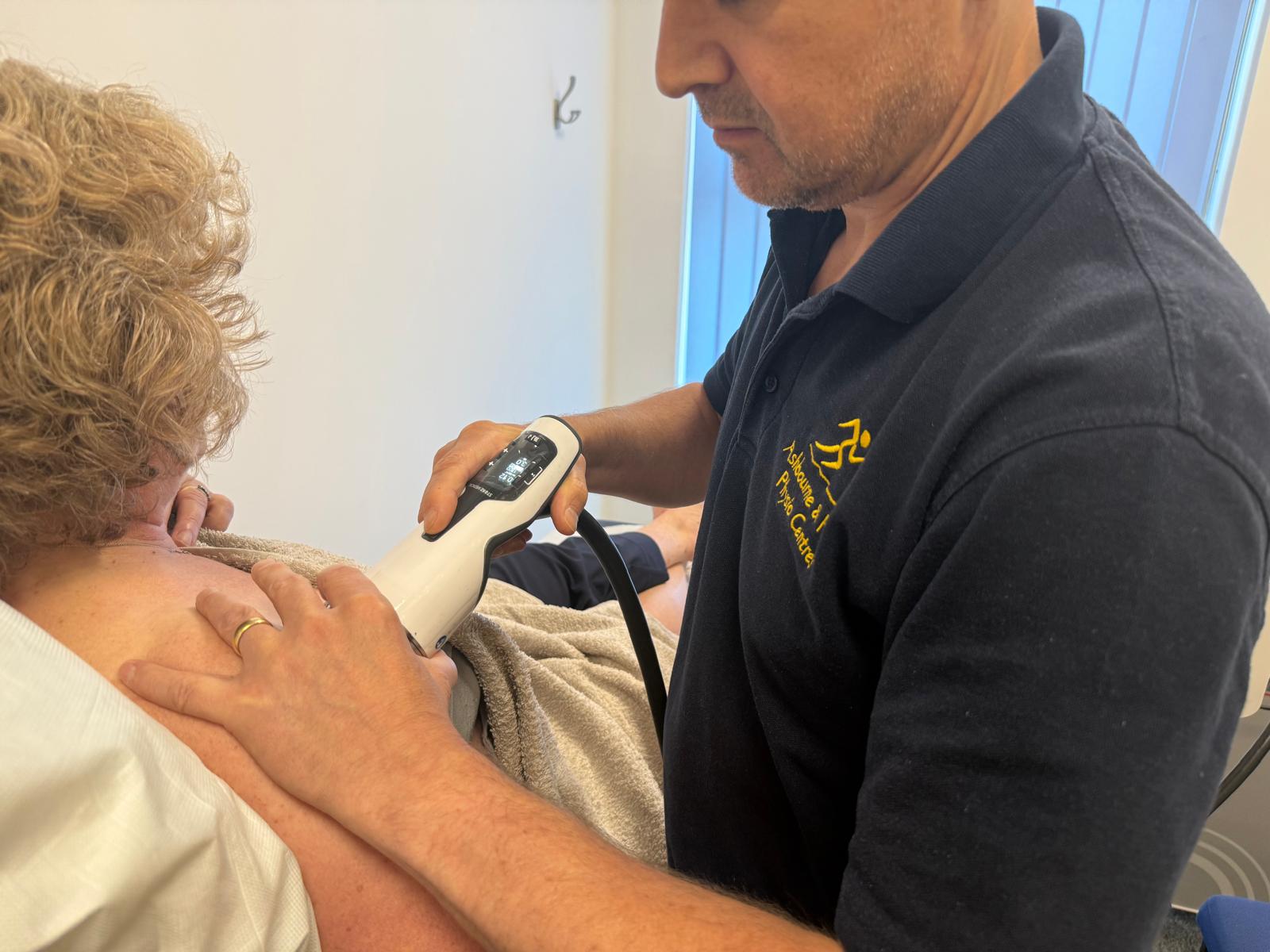
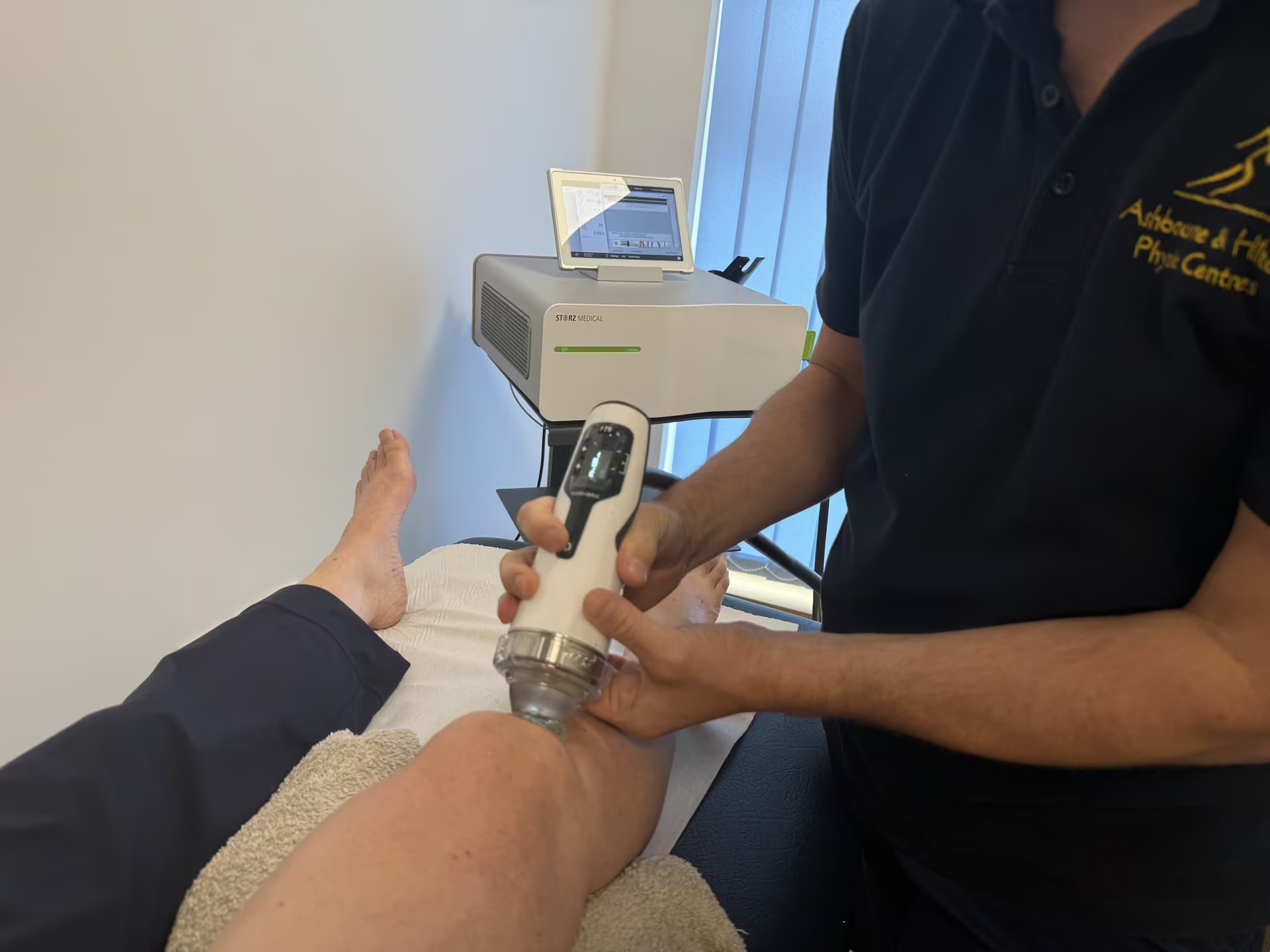
At our Ashbourne clinic, we offer state of the art Focused Shockwave Therapy with our Storz equipment:
Focused Shockwave Therapy
- Delivers energy deep into the body (up to 12.5cm)
- Effective for: tendinopathies, bone stress injuries, coccyx pain.
- Also effective for Erectile Dysfunction (ED), more information here.
Conditions We Commonly Treat
Shockwave Therapy is proven to help with:
- Achilles Tendinopathy
- Plantar Fasciitis & Heel Spurs
- Gluteal Tendinopathy (Hip Pain)
- Patellar Tendon Injuries (Knee Pain)
- Iliotibial Band Syndrome
- Tennis & Golfer’s Elbow
- Shin Splints (Medial Tibial Stress Syndrome)
- Delayed or Poor Bone Healing
- Erectile Dysfunction – Specialist treatment available
Research shows best results when combined with physiotherapy and rehabilitation.
What to Expect During Treatment
Following a though Physio assessment, a treatment plan will be discussed with you. Each treatment session lasts 30 minutes, including reassessment and rehab planning.
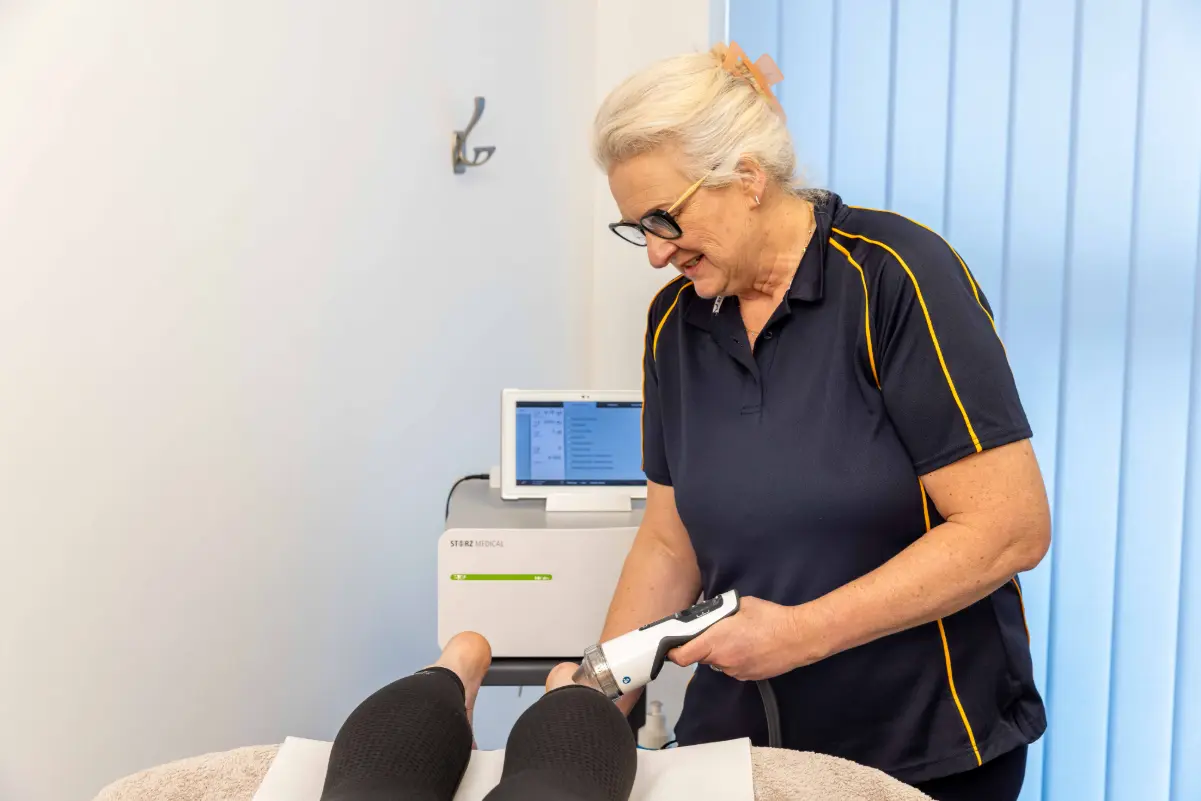
The shockwave device is applied to the affected area with gel, delivering pulsed waves for 5–10 minutes.
- You may feel some discomfort, but intensity is adjusted for comfort.
- Most patients report a feeling of the treatment “getting to the root of the problem.”
Aftercare and Recovery
It’s common to feel mild soreness after treatment – this is a normal part of the healing process.
You should:
- Avoid anti-inflammatory medications (e.g. Ibuprofen)
- Avoid ice on the treated area
- Limit strenuous activity for 48 hours post-treatment
Rare side effects include redness, bruising, or temporary numbness – these resolve quickly.
Why Choose Us for Shockwave Therapy
- Specialist expertise – Delivered by HCPC-registered physiotherapists trained in focused shockwave therapy.
- Proven effectiveness – Endorsed by NICE (National Institute for Health and Care Excellence, UK) for musculoskeletal conditions.
- Comprehensive care – Combined with physiotherapy and rehabilitation for best results.
- Advanced technology – Offering state of the art focused (deep tissue) shockwave treatments.
- Local and trusted – Serving patients across Ashbourne, Hilton, and Derbyshire and Staffordshire for over 20 years.
How Many Sessions Will I Need?
Typically, 3–4 weekly sessions are required for most conditions.
Larger or long-term problems may need up to 6 sessions.
We’ll often review your progress 2–3 months after treatment to assess outcomes and consider any top-up sessions.
Maximum benefits are usually seen 6–12 weeks after the last session.
Success Rate
Studies show an impressive 77% success rate across a wide range of conditions – especially for patients who haven’t responded to traditional treatments like rest, painkillers, or exercise alone.
Cost
Shockwave Therapy involves specialist equipment and expertise, so costs are slightly higher than standard physiotherapy sessions.
Any treatment involving shockwave will incur an additional £15 charge.
Why Choose Shockwave Therapy?
- Non-invasive & minimal downtime
- Alternative to surgery or injections
- Fast, effective, and evidence-based
- Trusted by elite sports teams and orthopaedic specialists
- Available now in Ashbourne
FAQs
Frequently Asked Questions
Is shockwave therapy safe?
Yes. Shockwave therapy is non-invasive, drug-free, and clinically proven. It is widely used in physiotherapy and carries very low risk of side effects.
Does shockwave therapy hurt?
You may feel some discomfort during treatment, but intensity is always adjusted to your tolerance. Any soreness afterwards usually settles within 24–48 hours.
How many sessions will I need?
Most patients need between 3–6 sessions, depending on the condition. Your physiotherapist will explain the plan after assessment.
Is Shockwave Therapy Appropriate For Me?
Criteria for Shockwave Therapy at Ashbourne Physiotherapy & Sports Injuries Centre
Ongoing tendinopathy for a minimum of 3 months and struggling to progress with physiotherapy and home exercise programme and have none of the contraindications below. Shockwave should only be provided by a qualified practitioner.
Contraindications:
- Pregnancy
- Cardiac Pacemaker or unstable heart condition
- Steroid injection in the area in the last 3 months
- Haemophilia / Clotting disorder / Risk of haemorrhage
- Unstable INR on warfarin or under 3.0
- Taking DOACs (rivaroxaban, apixaban, edoxaban, dabigatran)
- Over lung tissue
- Over or near bone growth centres until bone growth is complete
- Cancer
- Treatment site has open wounds, skin rashes, inflamed or infected areas
- Over ischemic tissues in individuals with vascular disease
- Allergy to coupling gel
- Under 18 years of age
- Osteogenesis imperfecta (a group of rare disorders affecting the connective tissue and characterised by extremely fragile bones)
- Taking Fluoroquinolone antibiotics (e.g. ciprofloxacin (Cipro), gemifloxacin (Factive), levofloxacin (Levaquin), moxifloxacin (Avelox), norfloxacin (Noroxin), and ofloxacin (Floxin)
Precautions:
- Fracture near the treatment area
- Underlying prosthetic joint
- Inflammatory Disease (not during an inflammatory phase or flare up)
- Previous Achilles Tendon Rupture (not until sold repair confirmed)
- Acute tendon/plantar fascia tear
- Increased or decreased sensitivity over area to be treated
- Ensure patient stopped use of NSAID’s 2/52 prior to commencing treatment
Potential Side Effects:
- Bruising, swelling, skin reddening
- Pain
- Numbness or altered sensation
- Skin ‘breaking’
- Tendon / Fascia rupture
- These side effects should resolve within the week before your next treatment. There is only a small risk of tendon rupture or ligament rupture and damage to soft tissue.
Stopping Treatment
You can stop treatment at any time. However, we do recommend that you complete the planned treatment course, as some effects are temporary and require repeated sessions to have a long-term impact. For further information please speak to your Physiotherapist.