
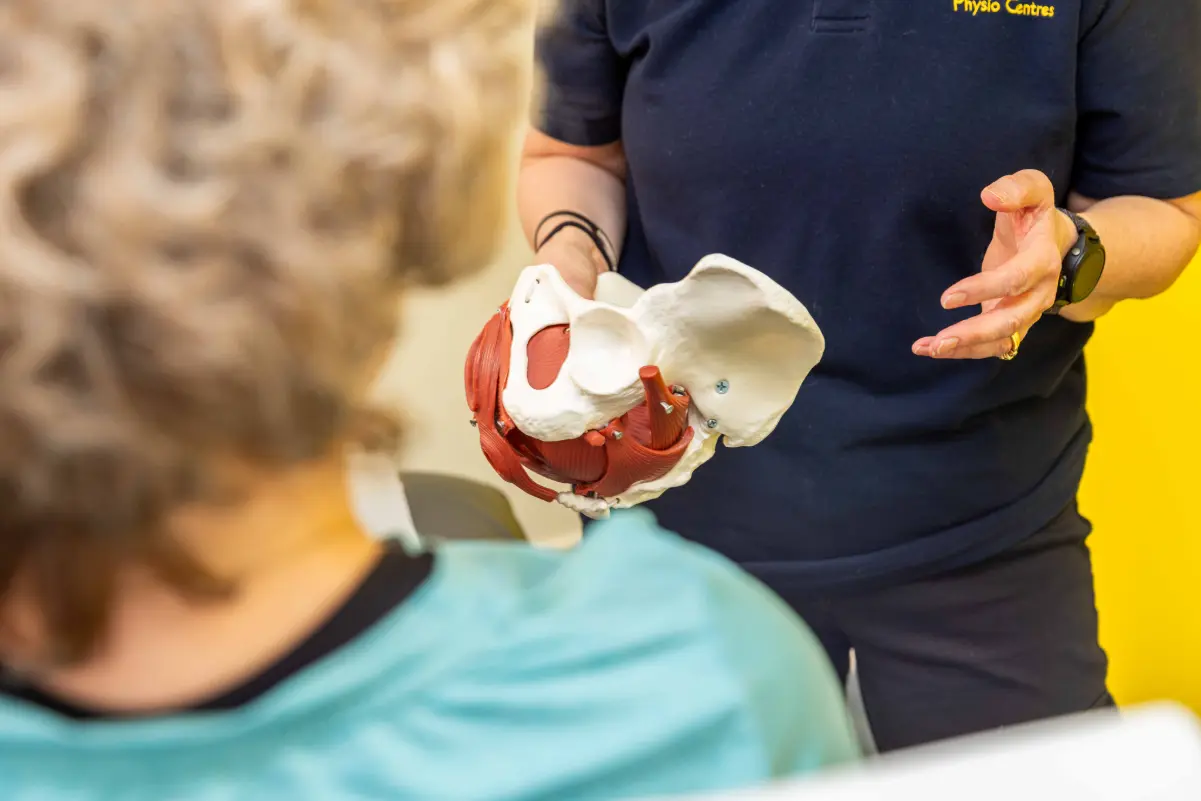
Understanding Women’s Pelvic Health Physiotherapy
If you are experiencing problems with your Pelvic Floor, whether that’s:
- Dribbling or leaking,
- Struggling to control your bladder,
- Pain in the Pelvic Floor,
- Pain during sex,
- Prolapse,
- Bowel related incontenence,
- Pelvic Girdle Pain (PGP)
You need expert, discrete expert help from a kind, friendly and experienced team.
At Ashbourne Physiotherapy & Sports Injuries Centre we have been providing a specialist Pelvic Physiotherapy service to women from Ashbourne and the surrounding area for over 30 years.
Gynaecological conditions such as stress or urge related urinary incontinence, bowel related incontinence, pelvic organ prolapse and pelvic pain are all conditions that impinge greatly on the daily lives of those affected. It can lead to a feeling of loss of control and isolation for some.
Physiotherapy can help to restore that control and empower you to manage your conditions and return to the activities you want. In many cases we can help and provide real improvements for suffers. We have Specialist Physios who have an interest in Pelvic Pain and related conditions who would be happy to discuss how physiotherapy may help you. Please contact the centre to arrange an appointment with Gillian, Elizabeth or Anna or ask to speak with one of us if you want to discuss further.
Other Symptoms You May Feel
Bladder
- leakage with coughing, sneezing and activity which may include sexual intercourse (stress urinary incontinence)
- urgency – a sudden need to go to the toilet that may include leakage (urge urinary incontinence)
- going to the toilet too often (frequency)
- getting up at night to go to the toilet (nocturia)
Bowel
- leakage with activity or urge (anal incontinence)
- difficulty getting clean after bowel movements
- leakage of wind
Vaginal
- a feeling of something coming down, or heaviness (pelvic organ prolapse)
- pain which can be vaginal or sometimes abdominal
- lack of sensation during sex
Pelvic floor muscle training improves both symptoms and severity of prolapsed in women with Pelvic Organ Prolapse
(Braekken et al 2010, Hagen et al 2009, 2011, 2014, Frawley et al 2012, Hagen et al 2014)
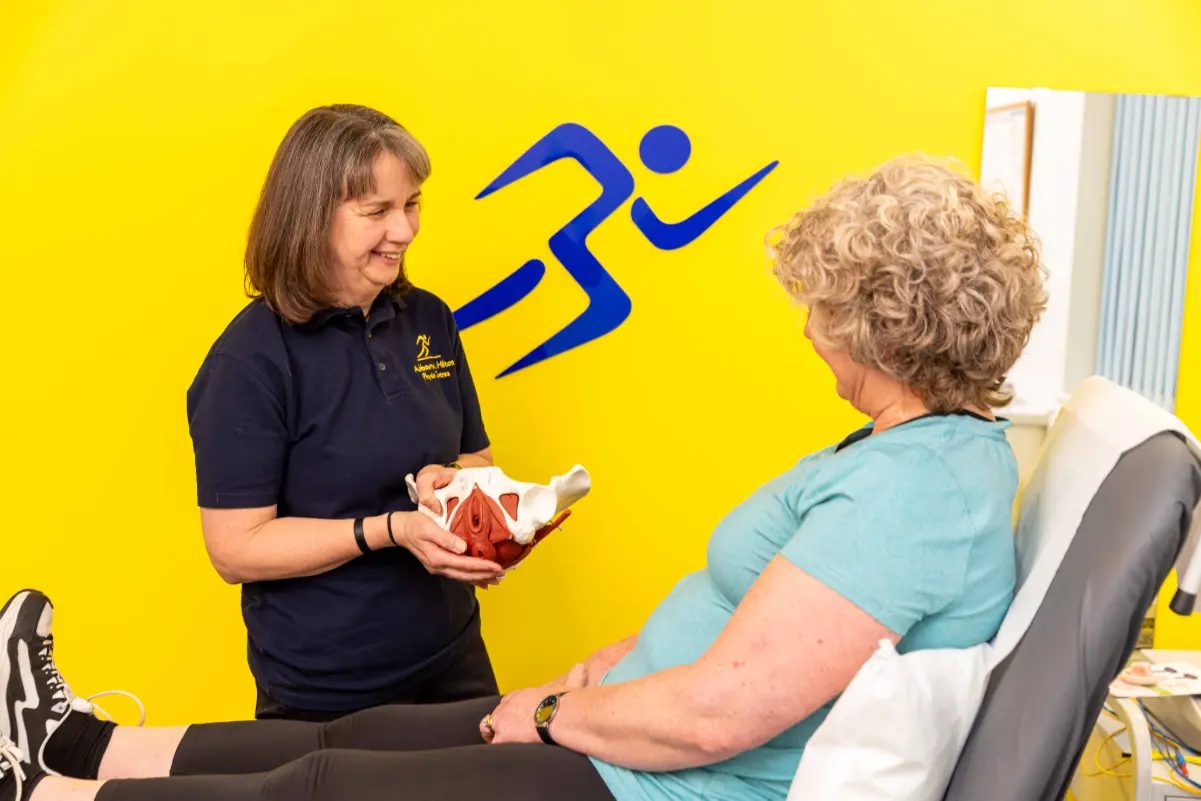
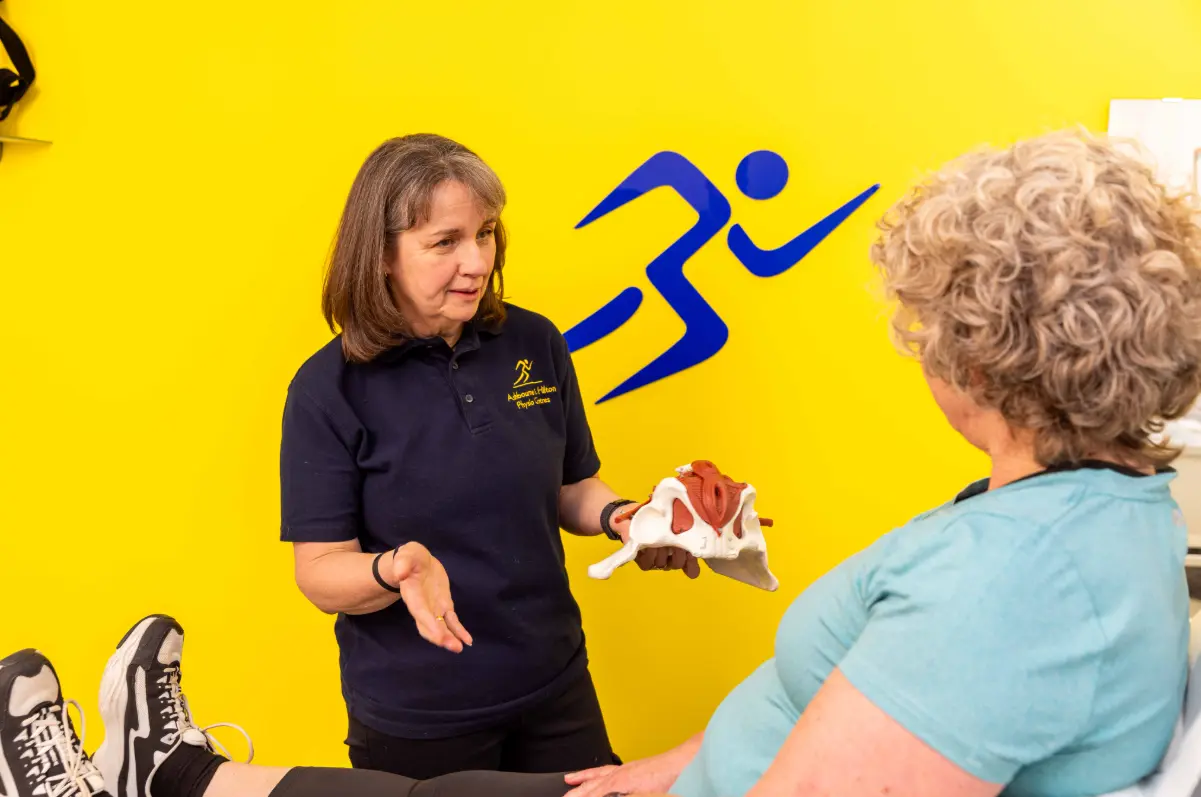
Pelvic Physiotherapy can offer help in all of the above by offering an assessment and explanation of your condition, after which with your therapist you can help you plan your rehabilitation. This may be as simple as re-educating your drinking and toileting habits combined with a home exercise programme or in some cases you may require more help.
Pelvic Floor Muscles
Up to 60% of all women experience a problem with their pelvic floor muscles at some time during their life. The most common problems are leaking with activity, sneezing or coughing (stress urinary incontinence) and pelvic organ prolapse (a feeling of something coming down in the vagina).
All the bladder, bowel and sexual functions require good pelvic floor muscles. Your pelvic floor muscles are important in posture, and with the abdominal muscles, help to support your spine.
6 in 10 Women Have Problems
Not all women with symptoms have weak pelvic floor muscles, but sometimes they need to learn to use their pelvic floor muscles in the right way and at the right time.
Why do problems occur with the pelvic floor muscles?
The pelvic floor muscles can be weak, overstretched, slow to work, too tight or torn just like the other muscles of your body.
Problems can be caused by:
- Childbirth
- Chronic Constipation
- Heavy or repeated lifting
- High impact exercise
- Being very overweight
- Smoking
- Menopause
Other conditions which affect the muscles may have an effect on the pelvic floor muscles e.g. neurological conditions and diabetes.
Physiotherapy can be invaluable in offering help for a variety of conditions related to pregnancy such as:
- Hip pain
- Back and sacroiliac pain
- Sciatica
- Symphysis Pubis Dusfunction
- Diastasis of Rectii (separation of the tummy muscles postnatally)
- Incontinence
- Pelvic Girdle Pain
Treatments that may be of benefit include:
- Acupuncture
- Manual therapy
- Exercise and advice
- Biofeedback from ultrasound or EMG postnatally
EMG & Ultrasound
Here at Ashbourne and Hilton after hearing your history and assessing your function we will plan your treatment with you and set the goals you wish to achieve. A significant time will be spent on education and advice in order that you can understand your problem and how to help yourself. Most treatments involve exercises that you will be asked to work on at home, between clinic visits, but often it is helpful to use biofeedback in order to educate in the most effective way to recruit the muscles that may be struggling. We use both ultrasound scanning and electromyography (EMG) to enable women to visualise the pelvic floor and abdominal muscle activation. This can be both in the clinic and, with the use of a portable EMG machine, at home in some cases.
EMG involves the use of a small electrode which can pick up the electrical activity of the motorneurone units as the muscles are activated (a little like ECG does with the heart). This shows a read out on a computer screen which enables us to see not only when the muscle is working but at what level which is very helpful when the problem is related to control of the muscle rather than just strength.
Pelvic pain conditions, with no systemic cause, often cause misery to the sufferer. Often they may be related to musculoskeletal dysfunction or to pelvic floor muscle issues and general instability which is why we feel that as physiotherapists we can be in an ideal position to assess and manage.
Please contact the centre to arrange and appointment with Gillian, Elizabeth or Anna or ask to speak with one of us if you want to discuss how physiotherapy may help you.
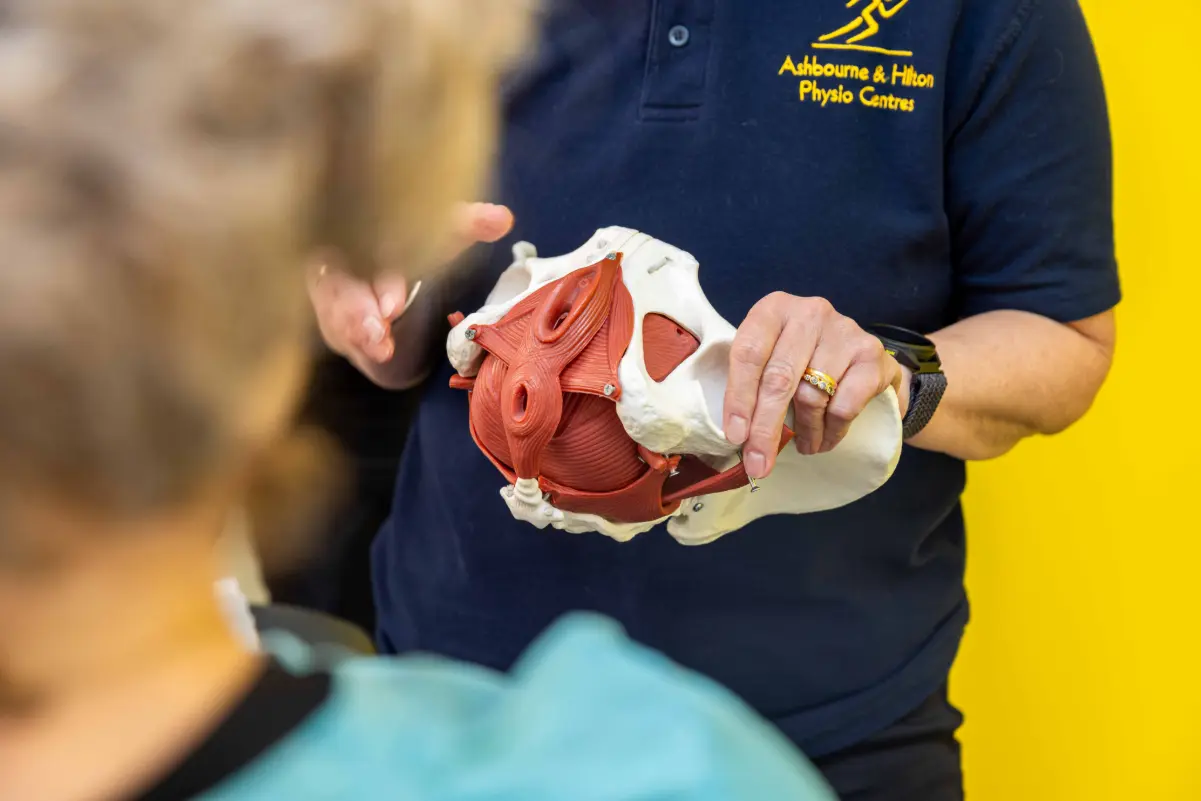
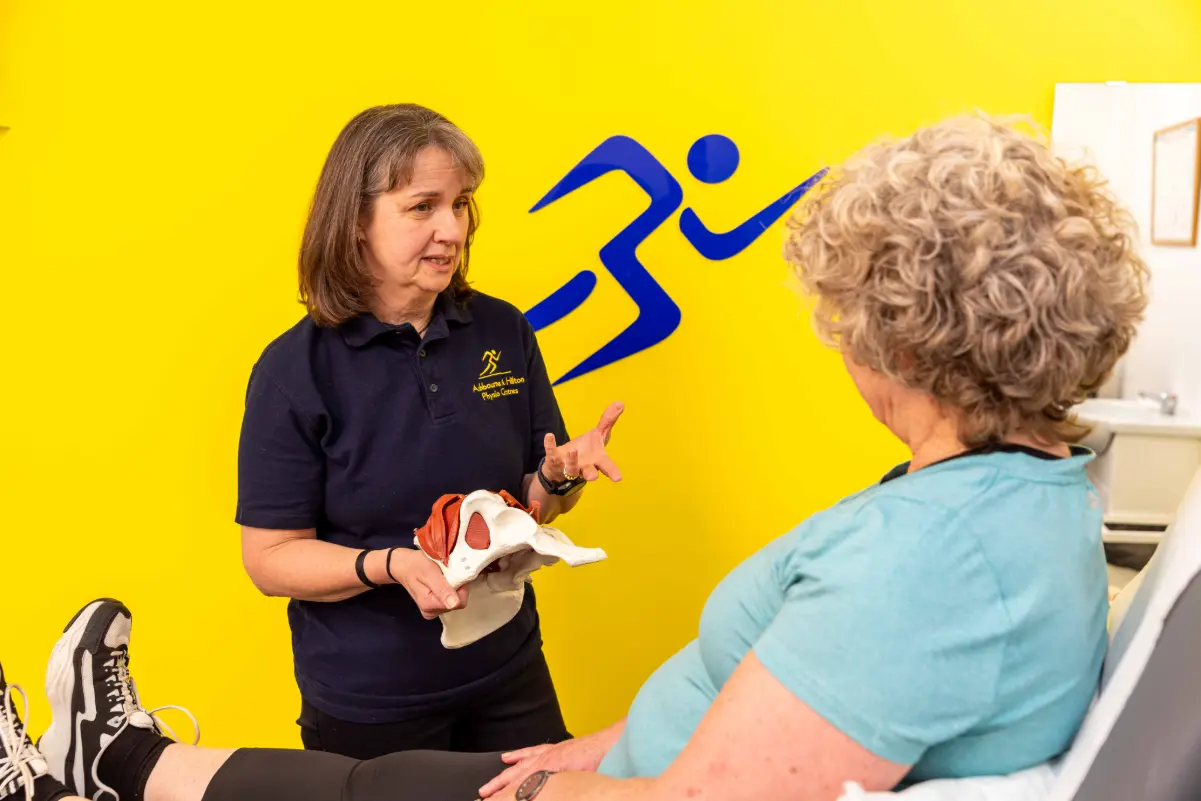
Why Choose Us for Pelvic Health Physiotherapy
- Specialist expertise – Over 30 years providing pelvic health physiotherapy in Ashbourne and Derbyshire.
- Highly qualified clinicians
- Evidence-based care – Using EMG and ultrasound to guide pelvic floor rehabilitation and education.
- Comprehensive support – Helping with incontinence, prolapse, pelvic pain, pregnancy-related issues, and postnatal recovery.
- Patient-centred approach – Sensitive, supportive, and discreet care in a welcoming environment.
FAQs
Frequently Asked Questions
Who are pelvic health physiotherapists?
Pelvic health physiotherapists are therapists who have a particular interest in pelvic health conditions such as incontinence, pelvic organ prolapse and pelvic pain. Our therapists have undertaken further post-graduate training to ensure that they have in-depth knowledge and skills to assess these conditions.
When should I see a pelvic health physiotherapist?
- Urine leakage when coughing, sneezing or laughing.
- Urine leakage relating to urge to urinate.
- Increased urinary frequency.
- A strong urge to urinate yet feeling unable to empty the bladder.
- Pain during urination or when the bladder is full.
- A feeling of bulging or bulkiness and/or aching in the vagina.
- Difficulty controlling the urge to empty my bowel.
- Difficulty controlling leakage of stool or wind.
- Painful bowel movements and/or constipation.
- Pain during or after sex.
How long does a physiotherapy pelvic examination take?
Your first appointment will last around 60 minutes and during that time the physiotherapist will conduct a detailed assessment including how and when your symptoms first started, what aggravates them and what makes them feel better. They may also ask you about previous treatments or investigations related to these symptoms. As part of the assessment, it will be important to discuss your previous medical history and any obstetric history and specifics about your lifestyle such as any hobbies or sports you take part in. This will ensure that they are able to make an accurate diagnosis and help you decide the best way to manage your symptoms.
Although it may seem daunting to talk about personal issues like these, especially if you have not done so before the therapist will be sensitive to this and will aim to put you at your ease. Discussions are conducted in a private area so that they cannot be overheard and are completely confidential. Everything that you tell the therapist is confidential and will not be discussed with anyone else without your permission.
You may be asked to fill in a bladder diary to find out what and how much you are drinking and how often you go to the toilet. Similarly, if you suffer with bowel symptoms, they may ask you to fill in a bowel diary.
For bladder, bowel and persistent pain conditions you may be asked if you are happy to undergo a vaginal or rectal examination to assess your pelvic floor muscle function. This is so that the therapist can assess the strength co-ordination and function of these muscles. This is useful as not everyone will benefit from the same rehabilitation program. You may wish to take a friend or family member with you or ask for a chaperone. The therapist will discuss this with you to explain why this is helpful and what it involves. These examinations will only ever be performed with your consent.
You may prefer not to have an examination or to wait and think about it beforehand. You may prefer not to be examined at all. This does not mean that you will not be offered treatment.
After the assessment the therapist will discuss the findings and treatment options with you so that together you can plan the most appropriate treatment plan.
Is pelvic floor physiotherapy worth it?
If you live with incontinence, painful intercourse or pain in the pelvic area, pelvic floor physical therapy may be the key to relief. In fact, it can be used to treat many disruptive, uncomfortable or painful conditions involving the pelvic floor.
Do you have to undress for a pelvic exam?
A typical pelvic exam only lasts a few minutes. You undress below the waist and cover your lower body with a sheet or gown. You lie down on the exam table with your legs raised and knees out to the side. Your physiotherapist will make you as comfortable as possible as it is important that you try to relax for the internal examination.
What treatment options are available?
The pelvic floor muscles area group of muscles that support your pelvic organs (the bladder, the uterus and the bowel). They are an important part of the control of our bladder and bowel function. Research has shown that pelvic floor exercises and lifestyle advice are the most effective ways of controlling symptoms such as leaking urine, wind or stool. These exercises are easy to perform when you know how and can be done anywhere.
Other treatments may involve strengthening or control exercises for the abdominal muscles and the diaphragm. Your therapist will guide you through the most appropriate rehabilitation program for you. It is important to have an individual program and follow advice as some types of exercises may not be appropriate for all women. In some cases, it can be important to learn how to relax the muscles before you start to strengthen them.
In cases where pain is one of your symptoms it may be important to find ways of controlling this before starting the strengthening.
When is it too late for pelvic floor therapy?
It is never too late to rehabilitate and learn to manage these symptoms.
What is best to wear to my pelvic health physio appointment?
It is fine to wear whatever you are comfortable wearing, but it may be helpful for the therapist to look at your general movements so wearing loose fitting comfortable clothes may be better.
Does pelvic floor physiotherapy hurt?
No, on rare occasions examinations may be uncomfortable but the therapist will always be guided by you and will stop at any stage if you are uncomfortable.
Can I see a pelvic floor physio on my period?
Yes, this is fine as long as you are happy to attend. It is still fine to be examined during a period provided you are comfortable with this. In some situations, it can even be useful as the muscle control may vary with your hormonal cycle. If you are not happy to be examined then that is fine, but there may still be other things that are useful to discuss. If in doubt discuss it with your therapist.
Do I need to wax or shave before attending?
No there is no need to wax/ shave/ groom the area before attending.
Should you shower before a pelvic exam?
Many women worry about unpleasant smells, discharge or sweat before an appointment, so may choose to shower that day. If this is not possible then, please still attend and do not worry.